
An Iron Condor places every leg in one expiration. A double diagonal uses a nearer short pair and a longer-dated long pair. Both may begin with a neutral outlook, but the diagonal’s value at the short expiration depends on options that still have time left.
What Are You Choosing Between?
Choose between a fixed same-expiration payoff and an exposure that also depends on the term structure of volatility. The diagonal is more sensitive to assumptions about the remaining long options. Its entry debit cannot be compared with the Condor’s credit as though both were an income payment.
The Main Differences
Swipe the table to compare all columns →
| Compare | Iron Condor | Double Diagonal |
|---|---|---|
| Construction | Sell a put spread and call spread with separated short strikes. | A longer-dated straddle against a nearer-dated strangle. |
| Example entry | $200 net credit | $1,000 net debit |
| Maximum profit | $200 | Depends on remaining option value and exit rule |
| Maximum loss | $300 | Requires the specified exit and assignment assumptions |
| Breakeven price | $93; $107 | Changes with time value and volatility |
A Practical Example
The Condor uses $90/$95 puts and $105/$110 calls, all at 30 days. The double diagonal buys a 90-day $100 straddle and sells a 30-day $95/$105 strangle. This is the inner-long-straddle version of a double diagonal; versions with outer long strikes differ. At day 30 the chart models 60 days of remaining time on the straddle.
XYZ is at $100 when the option trades are entered. Premiums below are per share; each option contract covers 100 shares. Each column shows one complete position, not an equal-capital allocation. Prices are hypothetical and exclude commissions, taxes, dividends, financing costs and early-assignment cashflows.
| Position | Example legs |
|---|---|
| Iron Condor | Buy 1 $90 put, 30 days, at $2.50 Sell 1 $95 put, 30 days, at $3 Sell 1 $105 call, 30 days, at $3 Buy 1 $110 call, 30 days, at $1.50 |
| Double Diagonal | Buy 1 $100 put, 90 days, at $8 Buy 1 $100 call, 90 days, at $8 Sell 1 $95 put, 30 days, at $3 Sell 1 $105 call, 30 days, at $3 |
Comparing Value at the First Expiration
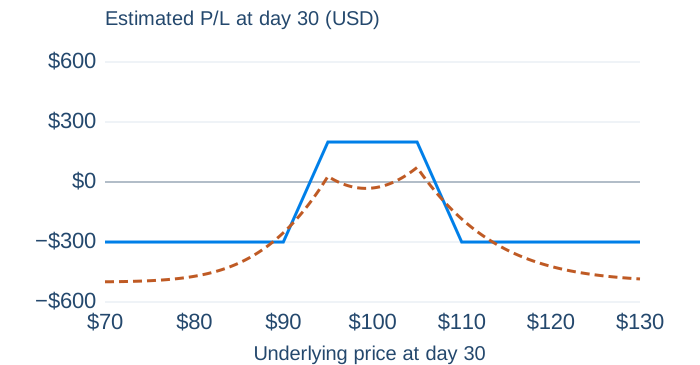
- Iron Condor
- Double Diagonal
Swipe the table to compare all columns →
| XYZ price | Iron Condor | Double Diagonal |
|---|---|---|
| $80 | −$300 | −$471.58 |
| $95 | $200 | $28.38 |
| $100 | $200 | −$30.11 |
| $105 | $200 | $72.95 |
| $120 | −$300 | −$421.82 |
What to Watch For
Do not add the independent maximum profits of the call and put diagonals: they may occur at different stock prices. If the shorts settle and the longs are retained, subsequent results require a new price path. The initial first-expiration chart no longer describes the whole trade.
Before expiration, time value and implied volatility can change a position’s market value. Short options also create exercise and assignment obligations. Review the full strategy guides for position management and settlement details.
Explore the Strategies
Try the examples:
- Iron Condor in the strategy builder
- Double Diagonal: use the full guide above for its multi-expiration assumptions. The single-expiration builder does not model this complete position.