
A standard call butterfly uses a 1:2:1 ratio. The long Christmas Tree compared here uses 1:3:2 and a narrower interval above the short strike. Both target a price region, but the Christmas Tree falls away more quickly on one side of its peak.
What Are You Choosing Between?
Compare the width of the profitable region as well as the maximum gain. The Christmas Tree can alter the debit and create a different target profile, but it adds contracts. A slightly better peak may not be worth a narrower exit window or higher trading costs.
The Main Differences
Swipe the table to compare all columns →
| Compare | Call Butterfly | Christmas Tree |
|---|---|---|
| Construction | Use equally spaced strikes with a 1:2:1 call ratio. | A 1:3:2 ratio with a lower interval twice the upper interval. |
| Example entry | $400 net debit | $350 net debit |
| Maximum profit | $600 | $650 |
| Maximum loss | $400 | $350 |
| Breakeven price | $94; $106 | $93.50; $103.25 |
A Practical Example
The butterfly uses $90/$100/$110. The Christmas Tree buys one $90 call, sells three $100 calls and buys two $105 calls. Each has zero net intrinsic value on the distant tails with this specific spacing. Their entry costs and their upper breakevens differ, even though both peak at $100.
XYZ is at $100 when the option trades are entered. Premiums below are per share; each option contract covers 100 shares. Each column shows one complete position, not an equal-capital allocation. Prices are hypothetical and exclude commissions, taxes, dividends, financing costs and early-assignment cashflows.
| Position | Example legs |
|---|---|
| Call Butterfly | Buy 1 $90 call, 30 days, at $12.50 Sell 2 $100 calls, 30 days, at $5 Buy 1 $110 call, 30 days, at $1.50 |
| Christmas Tree | Buy 1 $90 call, 30 days, at $12.50 Sell 3 $100 calls, 30 days, at $5 Buy 2 $105 calls, 30 days, at $3 |
Comparing the Expiration Payoffs
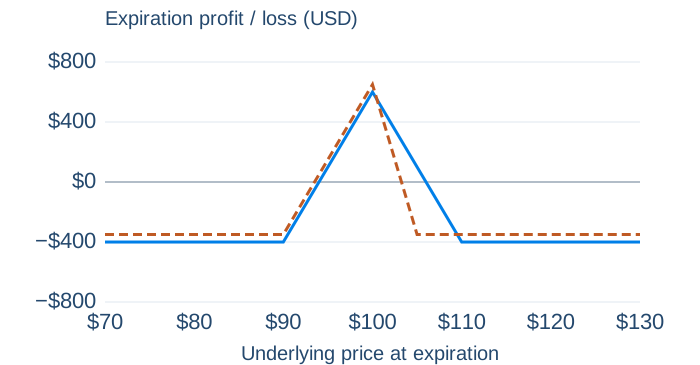
- Call Butterfly
- Christmas Tree
Swipe the table to compare all columns →
| XYZ price | Call Butterfly | Christmas Tree |
|---|---|---|
| $80 | −$400 | −$350 |
| $95 | $100 | $150 |
| $100 | $600 | $650 |
| $105 | $100 | −$350 |
| $120 | −$400 | −$350 |
What to Watch For
This guide compares the 1:3:2 Christmas Tree, not the 1:1:1 ladder sometimes given the same nickname. Arbitrary strikes do not preserve the balanced tails. Six option contracts also make costs and partial assignment important.
Before expiration, time value and implied volatility can change a position’s market value. Short options also create exercise and assignment obligations. Review the full strategy guides for position management and settlement details.
Explore the Strategies
Try the examples: