
A Reverse Iron Condor buys a strangle and sells a farther put and call around it. Those short wings reduce the debit but cap the gain on a large move. The Long Strangle costs more and retains participation beyond those outer strikes.
What Are You Choosing Between?
Compare the expected move with the location of the outer wings. If the target is near those strikes, paying less for capped participation may be worth considering. If the view is a very large move, the strangle keeps the extra payoff that the Reverse Iron Condor has sold away.
The Main Differences
Swipe the table to compare all columns →
| Compare | Reverse Iron Condor | Long Strangle |
|---|---|---|
| Construction | Buy the inner strangle and sell outer wings to reduce its cost. | Buy a lower-strike put and higher-strike call. |
| Example entry | $200 net debit | $600 net debit |
| Maximum profit | $300 | Unlimited |
| Maximum loss | $200 | $600 |
| Breakeven price | $93; $107 | $89; $111 |
A Practical Example
Both buy the $95 put and $105 call for a combined $600. Selling the $90 put and $110 call reduces the Reverse Iron Condor’s cost to $200. It can earn at most $300, while the Long Strangle keeps gaining beyond the wings. The two structures also have different breakevens.
XYZ is at $100 when the option trades are entered. Premiums below are per share; each option contract covers 100 shares. Each column shows one complete position, not an equal-capital allocation. Prices are hypothetical and exclude commissions, taxes, dividends, financing costs and early-assignment cashflows.
| Position | Example legs |
|---|---|
| Reverse Iron Condor | Sell 1 $90 put, 30 days, at $2.50 Buy 1 $95 put, 30 days, at $3 Buy 1 $105 call, 30 days, at $3 Sell 1 $110 call, 30 days, at $1.50 |
| Long Strangle | Buy 1 $95 put, 30 days, at $3 Buy 1 $105 call, 30 days, at $3 |
Comparing the Expiration Payoffs
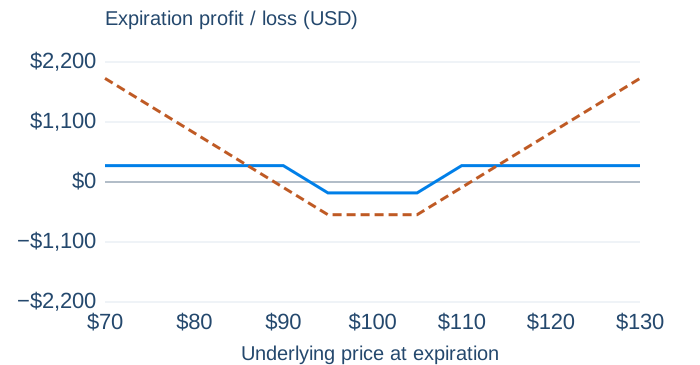
- Reverse Iron Condor
- Long Strangle
Swipe the table to compare all columns →
| XYZ price | Reverse Iron Condor | Long Strangle |
|---|---|---|
| $80 | $300 | $900 |
| $95 | −$200 | −$600 |
| $100 | −$200 | −$600 |
| $105 | −$200 | −$600 |
| $120 | $300 | $900 |
What to Watch For
The Reverse Iron Condor is the debit, long-volatility direction of the iron-condor family. It should not be confused with the credit Iron Condor that benefits from the stock staying between the short strikes. Specify the long and short legs every time.
Before expiration, time value and implied volatility can change a position’s market value. Short options also create exercise and assignment obligations. Review the full strategy guides for position management and settlement details.
Explore the Strategies
Try the examples: