
A front ratio spread sells more options than it buys. A backspread buys more than it sells. The additional short or long contract changes what happens after a large move beyond the outer strike, even when the same two strikes are used.
What Are You Choosing Between?
A front Call Ratio Spread targets a controlled rise toward the short strike, but can lose without limit after a very large rally. The Call Backspread reverses those legs, sacrificing the middle price region to retain open-ended upside. Put versions reverse the directional emphasis, with a finite stock-price floor.
The Main Differences
Swipe the table to compare all columns →
| Compare | Call Ratio Spread | Call Backspread |
|---|---|---|
| Construction | One long lower call and two short higher calls. | The two purchased calls sit above the one short call. |
| Example entry | $250 net debit | $250 net credit |
| Maximum profit | $750 | Unlimited |
| Maximum loss | Unlimited | $750 |
| Breakeven price | $92.50; $107.50 | $92.50; $107.50 |
A Practical Example
The front ratio buys one $90 call and sells two $100 calls for a $250 debit. The backspread reverses the position for a $250 credit. At $100, the front ratio earns $750 and the backspread loses $750. At higher prices their results eventually reverse. In this matched example, the two profit curves are exact negatives.
XYZ is at $100 when the option trades are entered. Premiums below are per share; each option contract covers 100 shares. Each column shows one complete position, not an equal-capital allocation. Prices are hypothetical and exclude commissions, taxes, dividends, financing costs and early-assignment cashflows.
| Position | Example legs |
|---|---|
| Call Ratio Spread | Buy 1 $90 call, 30 days, at $12.50 Sell 2 $100 calls, 30 days, at $5 |
| Call Backspread | Sell 1 $90 call, 30 days, at $12.50 Buy 2 $100 calls, 30 days, at $5 |
Comparing the Expiration Payoffs
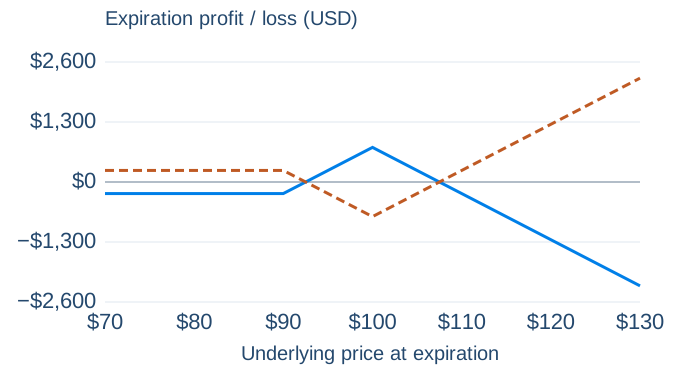
- Call Ratio Spread
- Call Backspread
Swipe the table to compare all columns →
| XYZ price | Call Ratio Spread | Call Backspread |
|---|---|---|
| $80 | −$250 | $250 |
| $95 | $250 | −$250 |
| $100 | $750 | −$750 |
| $105 | $250 | −$250 |
| $120 | −$1,250 | $1,250 |
What to Watch For
“Ratio” does not identify which side has the extra contract. State the bought and sold quantities explicitly. A Put Ratio Spread’s downside can be very large even though it is finite at zero; that is not the same as the unbounded upside loss of the call version.
Before expiration, time value and implied volatility can change a position’s market value. Short options also create exercise and assignment obligations. Review the full strategy guides for position management and settlement details.
Explore the Strategies
Try the examples: