
A Covered Call starts with shares and a sold call. A Cash-Secured Put starts with cash and a sold put. Their expiration exposure can be equivalent at a matching strike, even though one trader already owns shares and the other may acquire them on assignment.
What Are You Choosing Between?
An existing shareholder may be deciding whether to sell a call on that holding. A cash investor may be deciding whether to accept buying shares at the put strike. The decision also involves ownership, dividends, interest on reserved cash and the timing of assignment—not simply which option premium is larger.
The Main Differences
Swipe the table to compare all columns →
| Compare | Covered Call | Cash-Secured Put |
|---|---|---|
| Construction | Own 100 shares and sell one call against them. | Sell one put and reserve cash to buy 100 shares if assigned. |
| Example entry | $9,700 net debit | $800 net credit |
| Maximum profit | $800 | $800 |
| Maximum loss | $9,700 | $9,700 |
| Breakeven price | $97 | $97 |
Entry amounts include the stated stock purchase cost or short-sale proceeds. A net credit is not the broker’s required collateral, and historical stock cost is not new cash invested today.
A Practical Example
Buy 100 shares at $100 and sell the $105 call for $3, or sell the $105 put for $8. The Covered Call needs $9,700 net at entry. The put creates a $10,500 purchase obligation against which $800 premium is received; cash reservation depends on broker treatment. Ignoring interest and dividends, both break even at $97 and earn at most $800.
XYZ is at $100 when the option trades are entered. Premiums below are per share; each option contract covers 100 shares. Each column shows one complete position, not an equal-capital allocation. Prices are hypothetical and exclude commissions, taxes, dividends, financing costs and early-assignment cashflows.
| Position | Example legs |
|---|---|
| Covered Call | Own 100 shares at $100 Sell 1 $105 call, 30 days, at $3 |
| Cash-Secured Put | Sell 1 $105 put, 30 days, at $8 |
Comparing the Expiration Payoffs
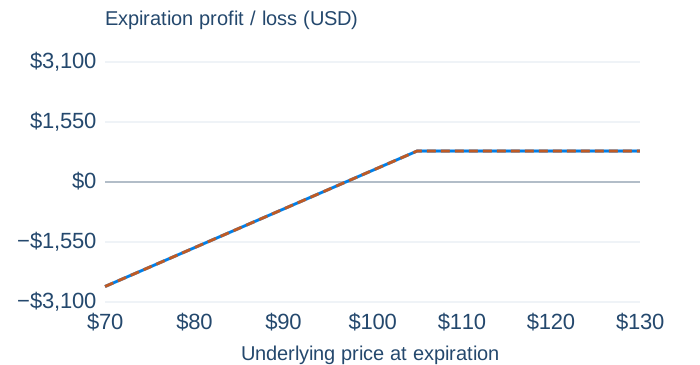
- Covered Call
- Cash-Secured Put
Swipe the table to compare all columns →
| XYZ price | Covered Call | Cash-Secured Put |
|---|---|---|
| $80 | −$1,700 | −$1,700 |
| $95 | −$200 | −$200 |
| $100 | $300 | $300 |
| $105 | $800 | $800 |
| $120 | $800 | $800 |
What to Watch For
Cash-secured does not mean the stock cannot lose value after purchase. Both examples can lose $9,700 if the stock reaches zero. The existing short-put guide also discusses uncovered trading; that use of margin is not the fully cash-reserved setup compared here.
Before expiration, time value and implied volatility can change a position’s market value. Short options also create exercise and assignment obligations. Review the full strategy guides for position management and settlement details.
Explore the Strategies
Try the examples:
Structure reference: OIC strategy explanation. The hypothetical comparison calculations are derived from the listed legs.