
A Bull Call Spread opens for a debit and a Bull Put Spread normally opens for a credit. With matching strikes and expiration, their expiration profit and loss can be the same after accounting for premiums and carry. The credit label alone does not make a trade more conservative.
What Are You Choosing Between?
Compare actual executable prices, fees, collateral treatment and assignment exposure. The call spread pays for its upside participation at entry; the put spread collects premium but retains an obligation. A broker’s displayed buying-power requirement may differ from the cashflow or maximum loss.
The Main Differences
Swipe the table to compare all columns →
| Compare | Bull Call Spread | Bull Put Spread |
|---|---|---|
| Construction | Buy the lower call and sell the higher call for a debit. | Buy the lower put and sell the higher put for a credit. |
| Example entry | $500 net debit | $500 net credit |
| Maximum profit | $500 | $500 |
| Maximum loss | $500 | $500 |
| Breakeven price | $100 | $100 |
A Practical Example
Both examples use $95 and $105 strikes. The call spread costs $5 per share; the put spread collects $5. Each loses $500 below $95, breaks even at $100 and earns $500 above $105. The lines overlap because the hypothetical premiums satisfy zero-interest, zero-dividend put–call parity.
XYZ is at $100 when the option trades are entered. Premiums below are per share; each option contract covers 100 shares. Each column shows one complete position, not an equal-capital allocation. Prices are hypothetical and exclude commissions, taxes, dividends, financing costs and early-assignment cashflows.
| Position | Example legs |
|---|---|
| Bull Call Spread | Buy 1 $95 call, 30 days, at $8 Sell 1 $105 call, 30 days, at $3 |
| Bull Put Spread | Buy 1 $95 put, 30 days, at $3 Sell 1 $105 put, 30 days, at $8 |
Comparing the Expiration Payoffs
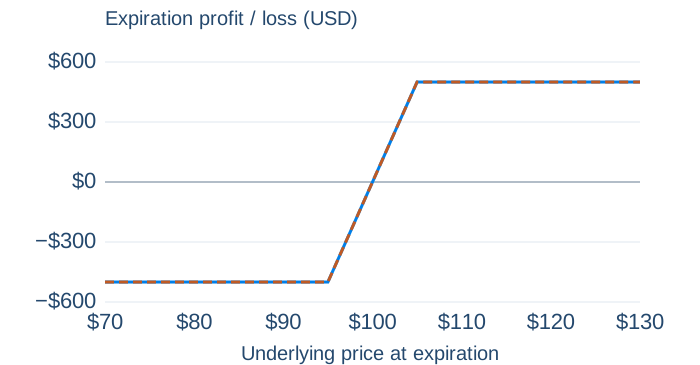
- Bull Call Spread
- Bull Put Spread
Swipe the table to compare all columns →
| XYZ price | Bull Call Spread | Bull Put Spread |
|---|---|---|
| $80 | −$500 | −$500 |
| $95 | −$500 | −$500 |
| $100 | $0 | $0 |
| $105 | $500 | $500 |
| $120 | $500 | $500 |
What to Watch For
This equivalence is an expiration comparison, not a promise of identical account cashflows. Early exercise, dividends, funding and bid–ask spreads can affect the choice. The short call and short put can lead to different stock transactions on assignment.
Before expiration, time value and implied volatility can change a position’s market value. Short options also create exercise and assignment obligations. Review the full strategy guides for position management and settlement details.
Explore the Strategies
Try the examples: